The Child Who "Can't Sit Still" — How Art Builds Focus
Art for Kids · Wed 22 July

"They just can't sit still." We hear it from parents all the time, often with a worried little sigh. And we understand — in a world of classrooms and quiet-time, a child who's always moving can feel like a puzzle to solve. But here's what we see in the studio, week after week: that energy usually isn't a problem to be fixed. With the right kind of activity, it turns into focus.

The "what exactly do you want from me?" face. Every active kid has it.
Why some children struggle to settle
Plenty of children simply learn through their bodies. Sitting still and listening isn't how they take the world in — moving, touching and doing is. Ask that child to be quiet and motionless at a desk, and you're working against the way their brain is wired.
And it's not just a hunch — the science backs it up. In a well-known study from Florida State University, children moved and fidgeted more exactly when a task demanded the most mental effort — suggesting the movement was helping them think, not distracting them (ScienceDaily summary). The national ADHD organisation CHADD describes how purposeful movement and fidgeting can give an active child the sensory input they need to stay alert and on-task. And a systematic review of physical activity and executive function found that even short bursts of movement improved attention, working memory and self-control.
The takeaway for us is simple: for a lot of children, movement isn't the enemy of focus — it's the doorway to it.

Strap an active child down and ask for perfect stillness, and you'll get this look. Fair enough.
What hands-on art changes
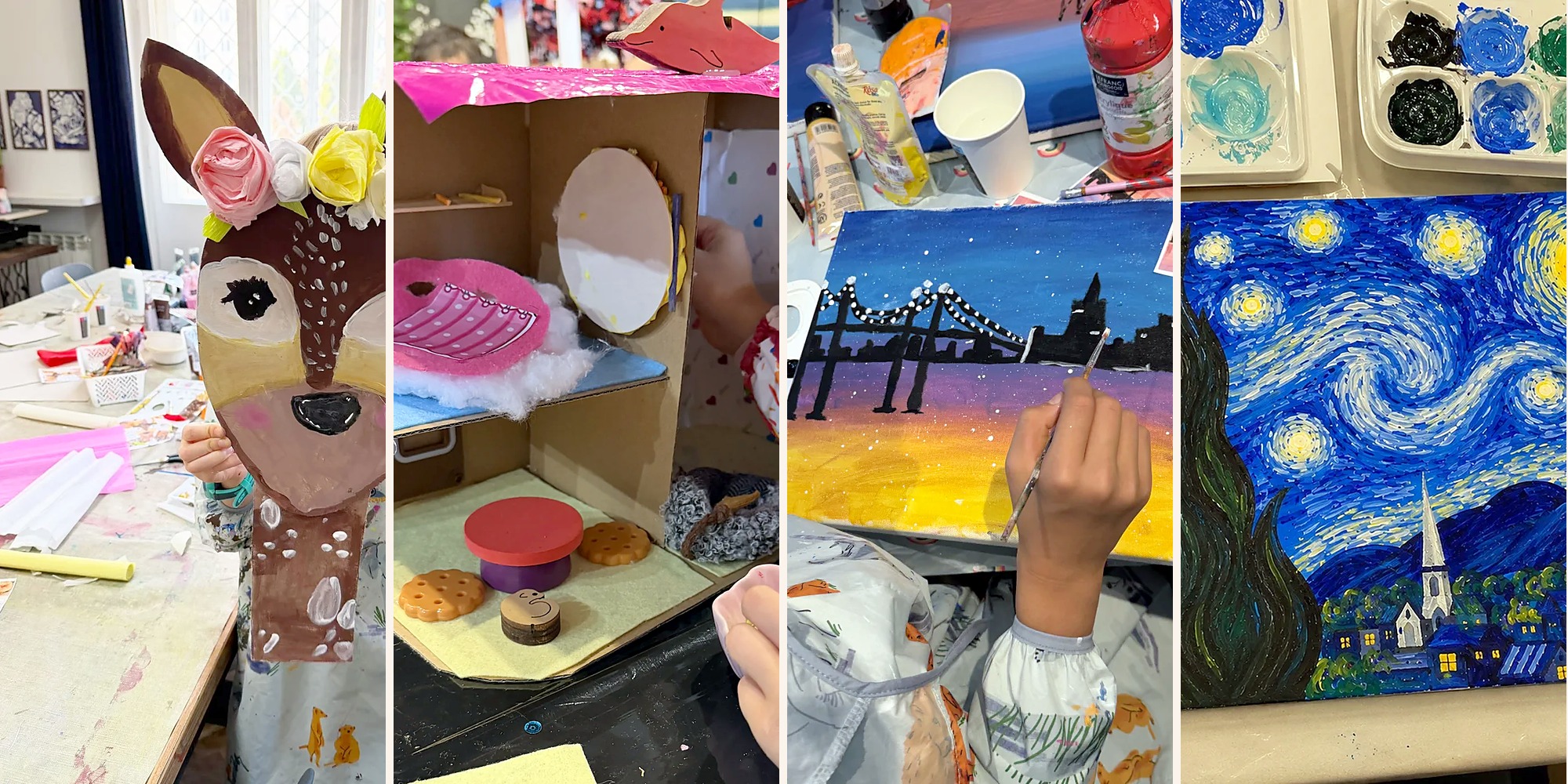
Art that involves the whole child — mixing, moulding, building, painting big — meets that need for movement head-on. We see it happen live:
- The task absorbs the energy. Squeezing clay, stirring paint, building a tall tower — the body is busy, so the mind can settle.
- The reward is immediate. A brushstroke shows up straight away. That instant feedback keeps a restless child coming back for the next step, and the next.
- There's no wrong answer. Without the fear of getting it "wrong", the pressure lifts — and focus arrives on its own.
What we do when a child needs more movement
Here's something we're always honest with parents about. In our regular classes, if we notice over a few weeks that a child is bursting with energy and only half-settling into a seated, detailed project each time, we'll gently say so — and suggest switching them to a more active format. That might mean bigger, more physical projects, a standing station, messier hands-on work, or a class with more room to move.
It's never a sign a child is "behind" or "difficult". It's simply about matching the activity to the child, so their energy has somewhere brilliant to go instead of somewhere to be squashed. Almost every time, the same child who "couldn't focus" suddenly can.
The moment it clicks
Our favourite thing is watching a parent's face when they collect a child who "never concentrates" and hear that they were nose-down in a project for a solid hour. It's not magic. It's simply what happens when an active child is finally allowed to learn the way they're built to.
A quick, important note
Being lively and full of energy is completely normal — and it doesn't mean a child has ADHD or anything else. Much of the research above comes from studying children with ADHD, but the same simple truth helps almost every active child: give their energy somewhere wonderful to go, and focus tends to follow.
If this sounds like your child, we'd love to meet them. Come and try a workshop — we think you'll be surprised.
Ready to start creating?
Bring your little artist to a class where English just happens.
Book a class