BODY WORLDS in Warsaw — An Exhibition for Adults, and a Reminder to Move
Art for Kids · Mon 27 July
We write here mostly about children — what they make, what they notice, how they learn. This post is not about them. It is for you, the grown-up reading this, and it is about an afternoon we spent without a single child in tow.
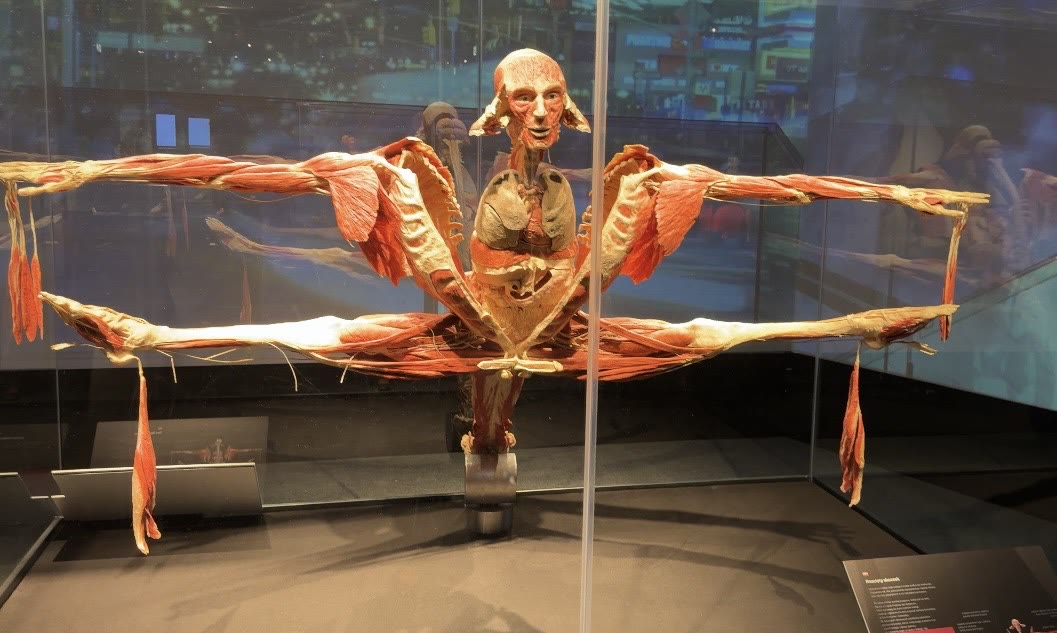
We went to see BODY WORLDS PULSE at the Soho Art Center in Praga: an exhibition of real human bodies, preserved and opened up so you can see exactly what is happening beneath your own skin. We came out quieter than we went in.
If it is on your list, do not leave it too long. The exhibition closes on 30 August 2026.
What BODY WORLDS actually is
BODY WORLDS is the exhibition that made anatomy public. The bodies on display are real, and they are here because people chose to donate themselves to the Institute for Plastination's body donation programme. They are preserved through plastination, a technique invented by the anatomist Dr Gunther von Hagens, in which the body's water and fat are replaced with plastics — so what you are looking at keeps its shape, its colour and its detail indefinitely.
This edition is called Pulse, and its subject is the body in health and under strain: how strong it is, how fragile it is, and how much of its condition is genuinely in our own hands.
Why it is worth an afternoon of your own
Most of us go years without thinking about our bodies as objects — as machinery with a certain number of moving parts, all of it working away without being asked.
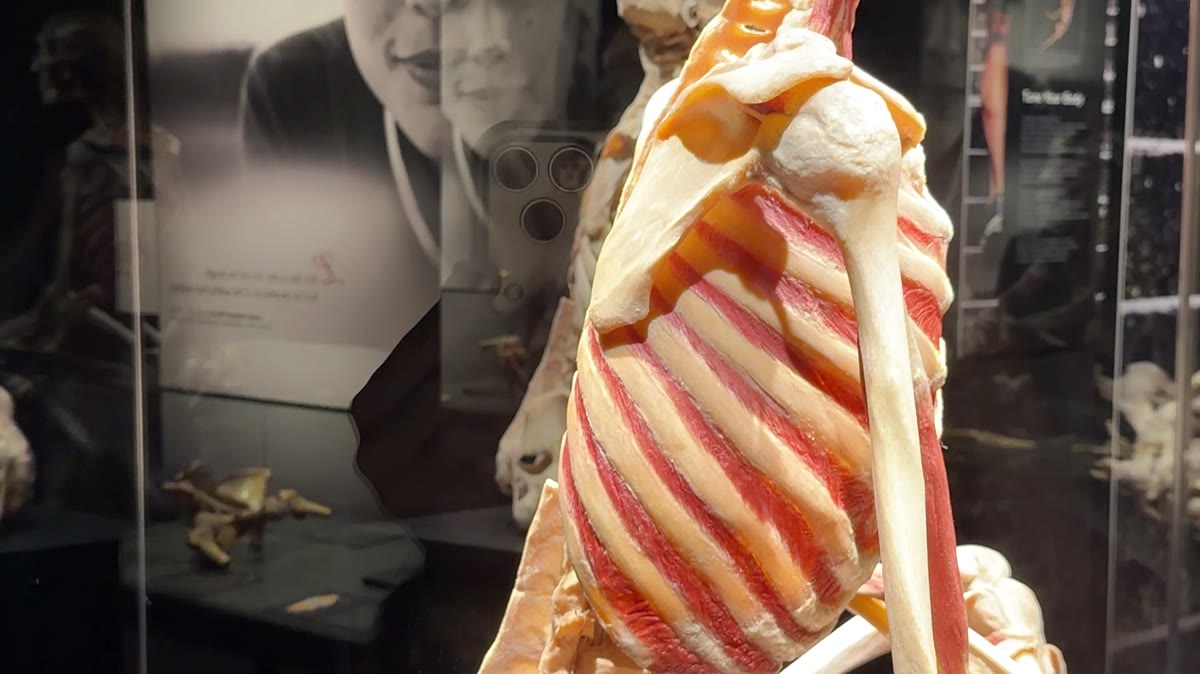
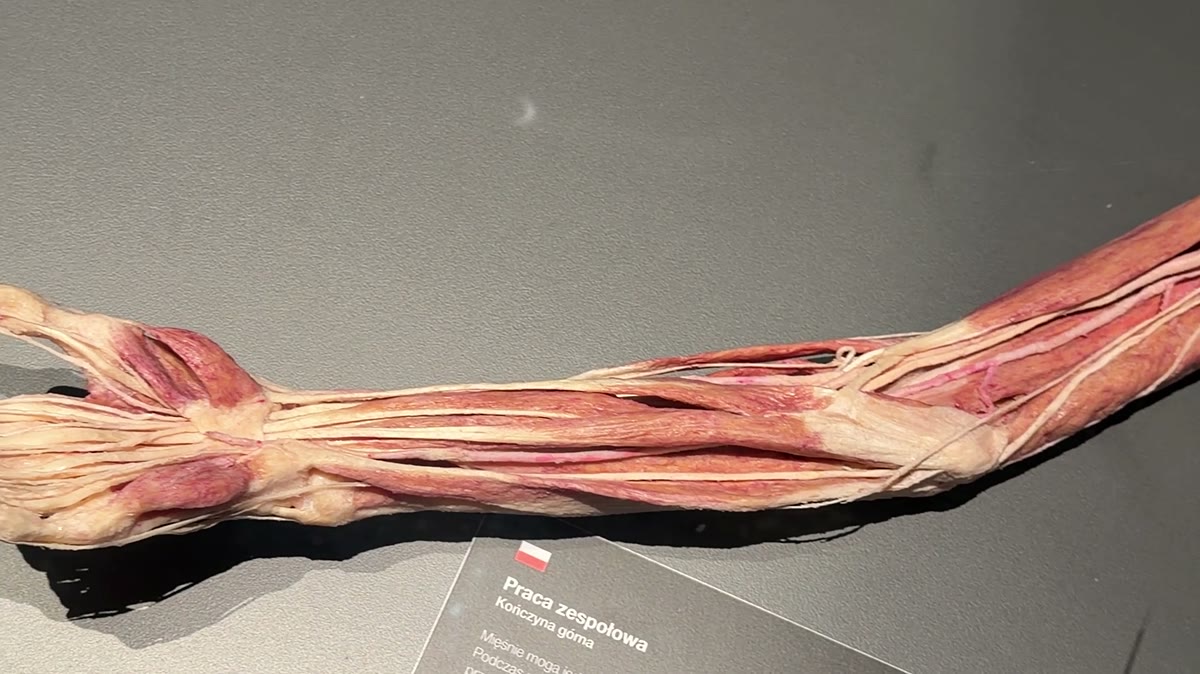
Standing in front of a real one dismantles that. Muscle is not the flat red of a textbook; it is a dozen shades of rust and cream, layered like fabric. A hand is an astonishing tangle of tendons. A spine is far more delicate than you expect, and a heart is far smaller.
And running underneath it all is the fact that every one of these people was a person — someone who decided that after their death, strangers should be able to learn from them. It is a surprisingly moving thing to walk around. Allow yourself an hour and a half, and do not rush it.
The part that stayed with us: we are built to move
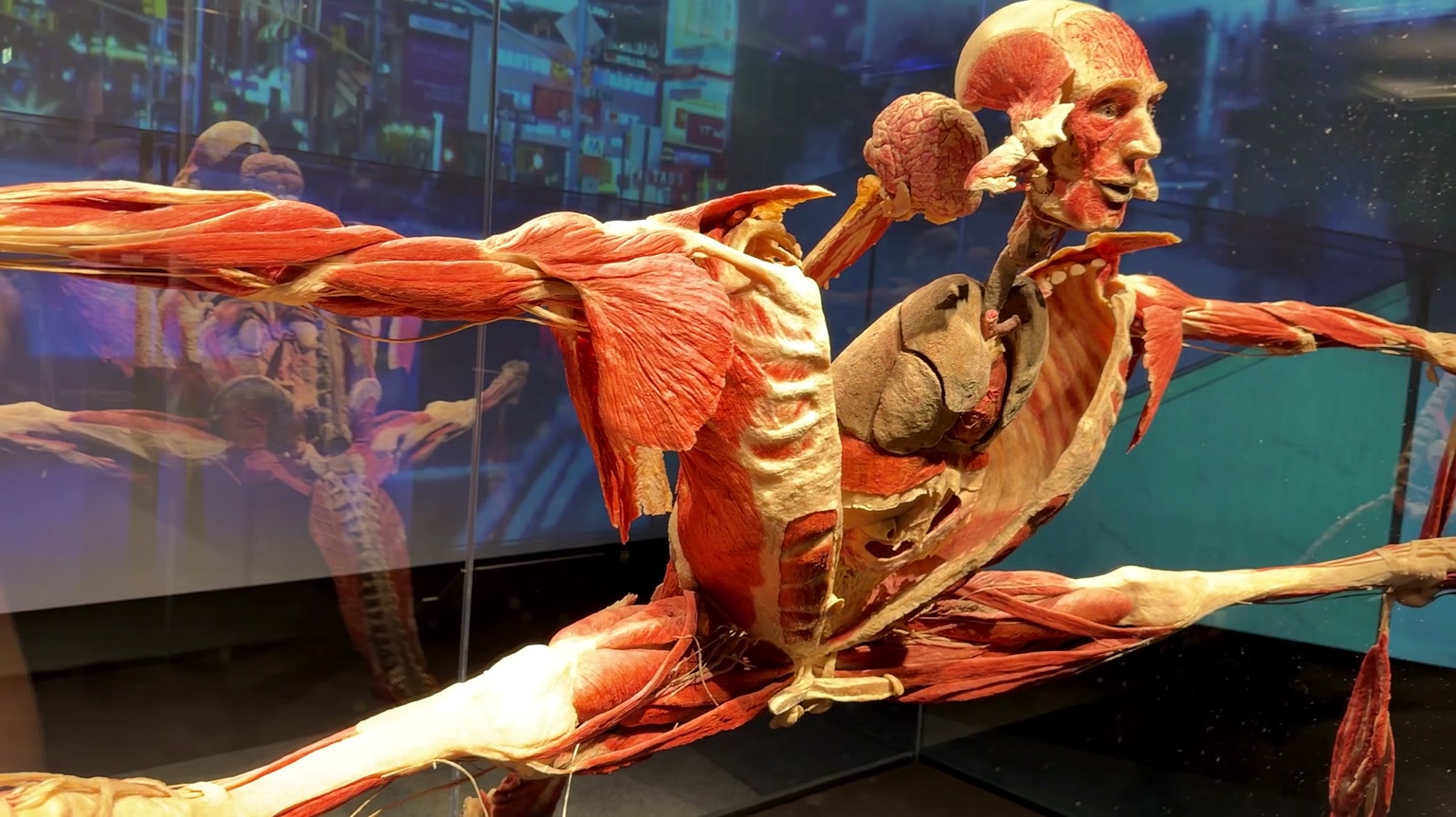
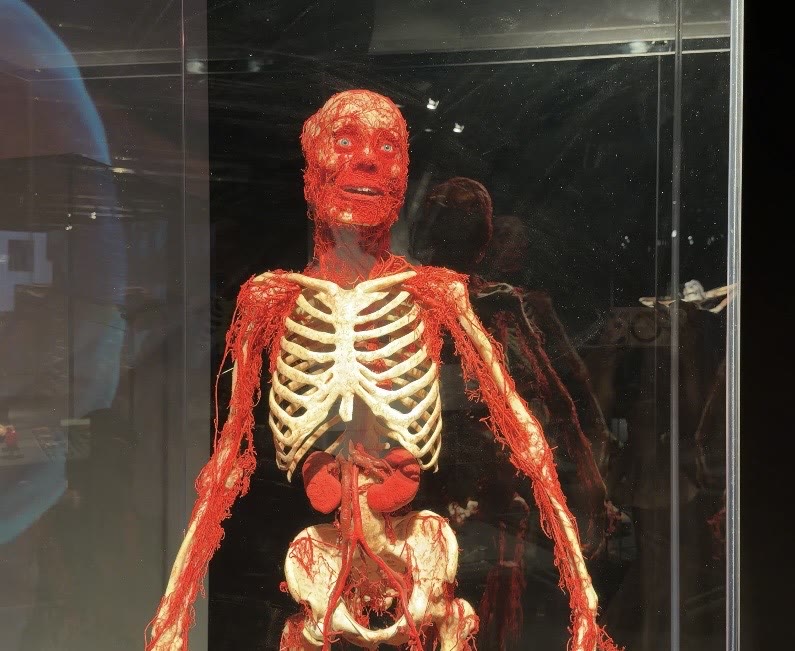
Stand in front of a full-body plastinate caught mid-stride and one thing becomes obvious very fast: almost all of it is movement equipment. Muscle, tendon, bone and joint, layer upon layer, wrapped around a frame that exists to walk, run, lift, reach and climb.
Your heart is a muscle too, and it responds to being used exactly like the muscles in your arm.
Then you go home to a desk. Most of us now spend our working lives in a chair, our commutes in a seat, and our evenings on a sofa — asking a body built for a day's walking to do almost nothing at all.
The exhibition makes the point gently but unmistakably: visitors, in its own words, "leave with a new appreciation of the power we have to keep our bodies healthy."
For adults, the World Health Organization's guidance is at least 150–300 minutes of moderate-intensity aerobic activity a week — or 75–150 minutes of vigorous activity — plus muscle-strengthening work on two or more days a week. Read that as a weekly total rather than a daily obligation and it stops sounding like a gym membership. It is around twenty to forty minutes a day of something that leaves you slightly out of breath:
- Walking part of the commute instead of all of it in a seat
- Stairs, taken deliberately, as the default rather than the exception
- A bike for the short trips that quietly became car trips
- Something with resistance twice a week — that is the part almost everyone skips, and it is the part that protects your bones and muscle mass as you age
- Standing up regularly, because long uninterrupted sitting carries its own risk, separate from how much you exercise
The most sobering cases
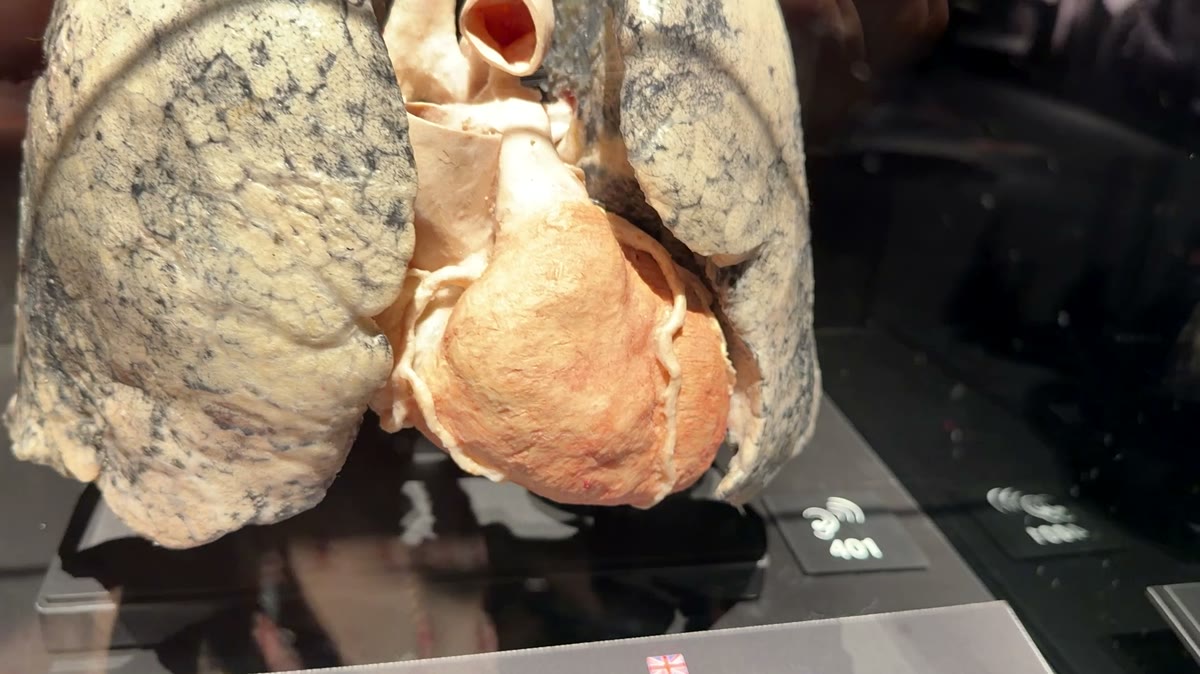
The hardest things to look at are the cases showing the same organ twice — once healthy, once after years of strain. No lecture, no statistics. Just two objects side by side, and the difference plain enough that nobody needs to explain it to you.
You cannot see your own arteries. That is precisely the problem with the slow, invisible decisions that shape them. This exhibition makes them visible for an afternoon, and that turns out to be worth a great deal more than a leaflet.
And what we take back to the studio
We do think there is something here for children — just not this exhibition, and not yet.
Children learn what movement is worth by watching the adults around them. The WHO recommends children and adolescents aged 5–17 get at least an average of 60 minutes a day of moderate-to-vigorous activity, and no child hits that because they were told to. They hit it because walking, cycling and playing outside are simply what their family does.
So the useful thing we brought home was not a fact about anatomy. It was a reminder that our own habits are the lesson.
Would we take children? Honestly — no
There is no formal age limit. The venue sells family and school tickets, and there are teaching materials for schools, so plenty of people do bring children.
Our view, having been, is that this is an exhibition for adults. The specimens are unmistakably human — faces, hands, whole people — and there is a prenatal development section that many visitors find affecting and that we would not put in front of a young child. It is not gory, and it is not disrespectful. It is simply serious, and it asks for a kind of composure that most children under about twelve have not got yet.
Older teenagers, especially any who are drawn to biology or medicine, are a different matter — they tend to get a great deal out of it. Below that, we would go on your own and let them keep their afternoon.
If you want to go — the details
BODY WORLDS PULSE
Soho Art Center, ul. Mińska 63, Warsaw (Praga)
17 April – 30 August 2026
Tuesday to Sunday, 10:00–20:00. Closed Mondays.
Allow around an hour and a half.
Tickets and full details are on the official site: warszawa.bodyworlds.pl (there is an English page at bodyworlds.com too).
Go before 30 August — and then, perhaps, walk home instead of taking the tram.
At Art for Kids we run creative workshops in English for children aged 5–12 in Warsaw. Get in touch if you would like to join us.
Ready to start creating?
Bring your little artist to a class where English just happens.
Get in touch