What's New at the Museum of Modern Art in Warsaw?
Art for Kids · Sun 23 August
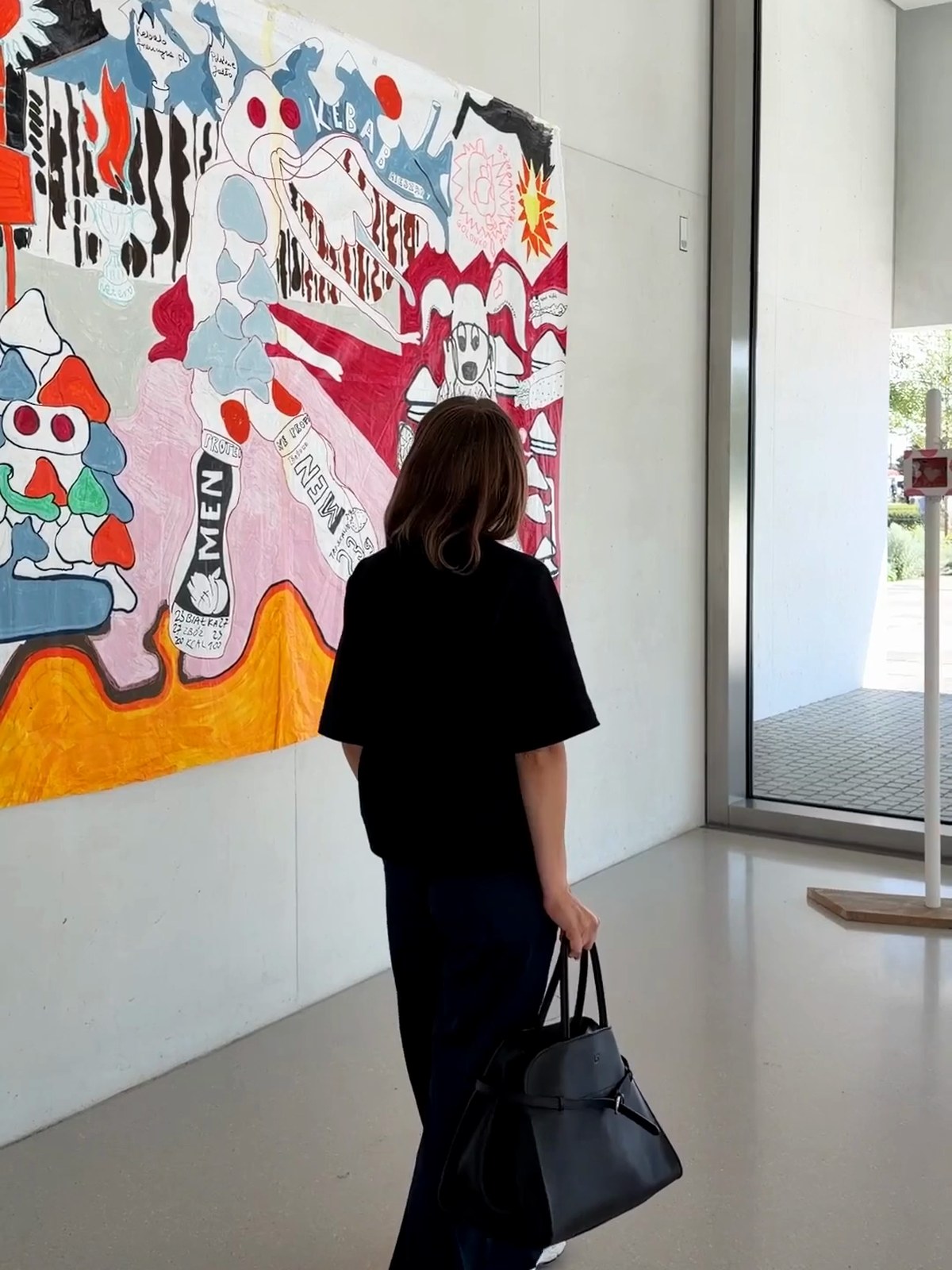
We went back to the Museum of Modern Art in Warsaw — the white building on Plac Defilad, the one most people still call "the new MSN" — because almost everything on the walls has changed since our first visit. Two big exhibitions opened at the end of July, two more close at the end of August, and a whole new season starts in September.
So: what's new at the Museum of Modern Art, and which rooms are actually worth your time if you are walking in with a six-year-old rather than an art critic? Here is our honest run-through.
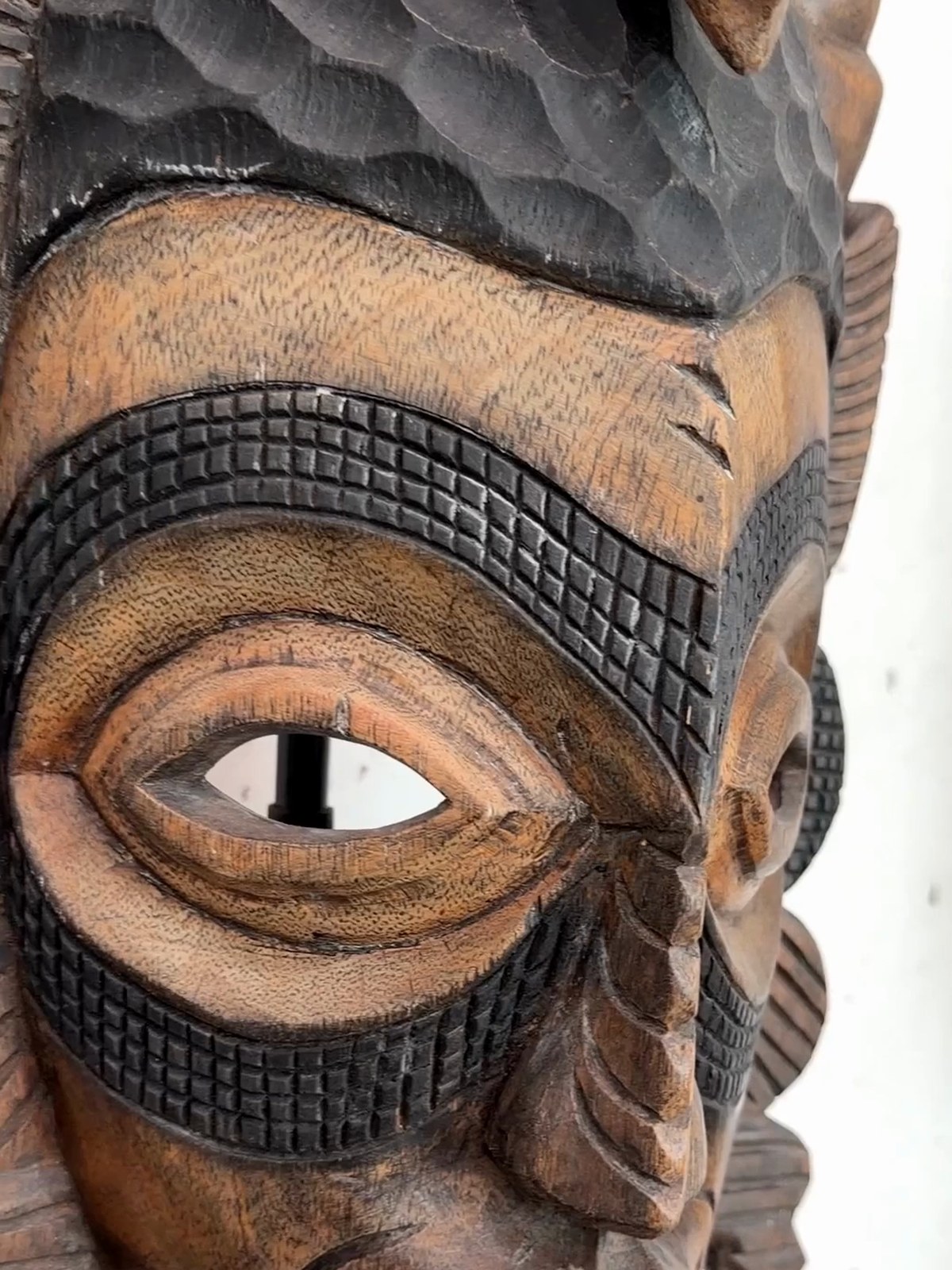
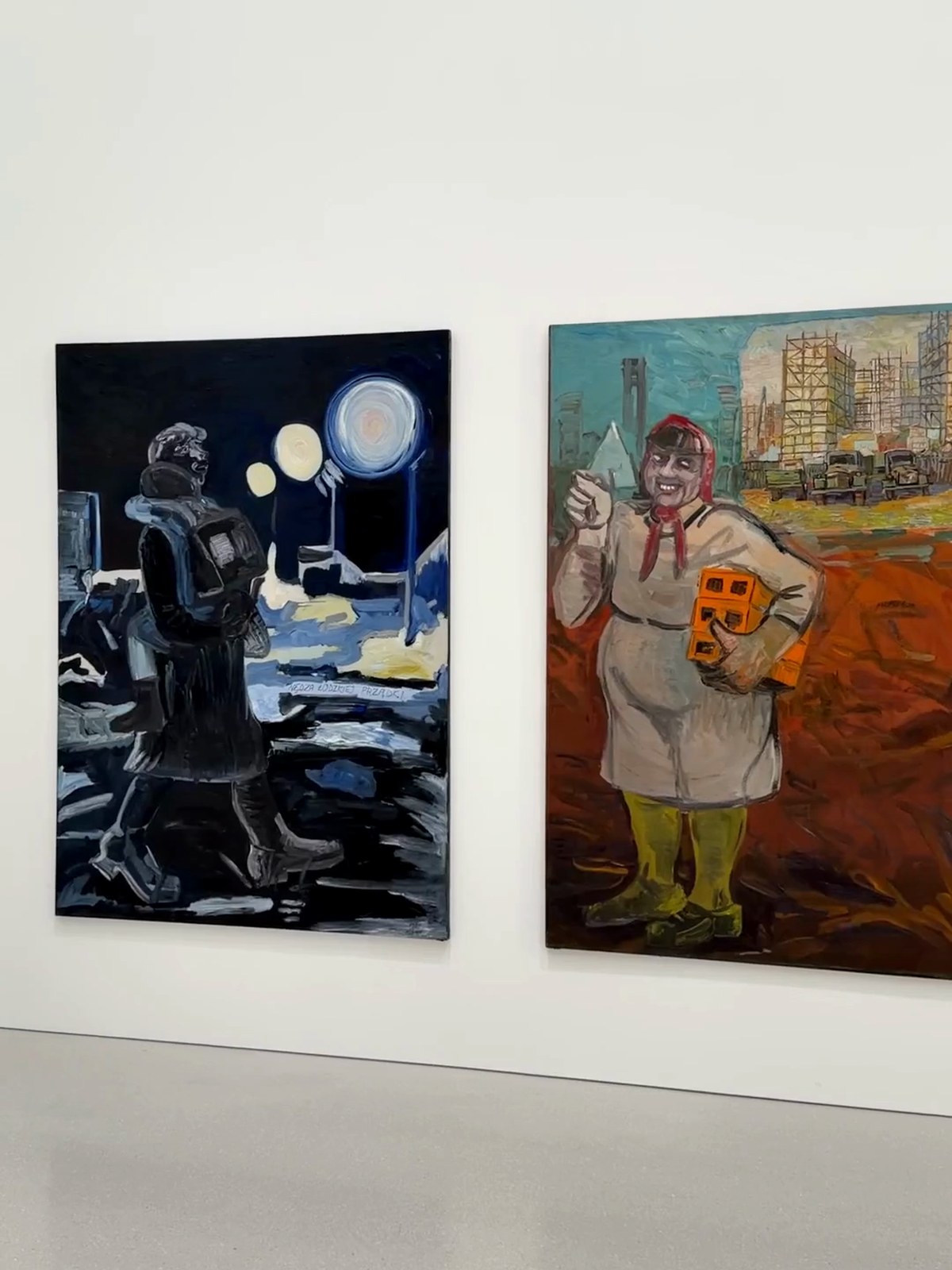
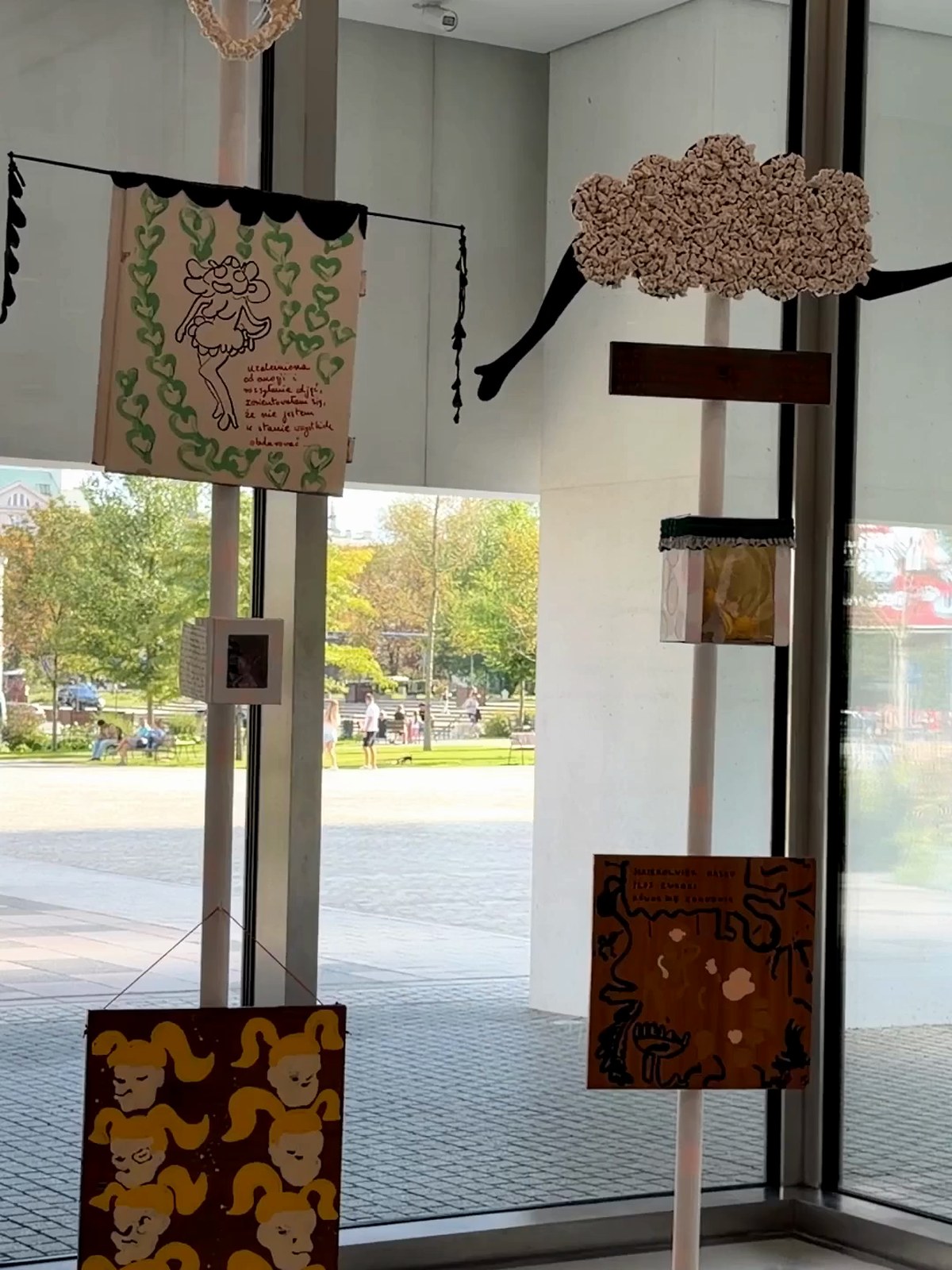
The photographs here are from our own visit. The museum moves work around constantly, so treat them as a taste of the building rather than a map of which piece hangs in which show — for that, the dates and titles below are what you need.
Edward Dwurnik: Pride and Shame
31 July 2026 – 28 February 2027 · ages 6+
This is the one to build your visit around. Edward Dwurnik is one of the most recognisable Polish painters of the last fifty years, and this show gathers his work from the 1970s and 80s — above all the two cycles Sportowcy (Athletes) and Robotnicy (Workers), together with large canvases such as Klęska urodzaju (1975) and Przystanek autobusowy (1974).
What makes it work for children is the subject matter. Dwurnik painted ordinary people doing ordinary things — waiting at a bus stop, working, playing sport — flatly, directly, always telling a story. Something is always happening in the picture, which means a child always has something to describe. Stand in front of one and ask: who is this person, and what are they doing? Everything else follows from that.
The paint is thick and the brushstrokes are left visible, and that quietly tells a child something important: a person made this, by hand, and you can see how.
Patryk Różycki: Transformation
31 July – 11 October 2026 · ages 9+
Patryk Różycki shows a cycle of paintings from 2021–2024 as an intervention inside the Dwurnik exhibition. The subject is his own childhood and adolescence in the Polish countryside during the economic transformation of the 1990s — class, money, shame, the things families do not talk about.
It is honest and it is not decorative. Younger children will simply see strong colours and odd, dreamlike figures, which is fine. Older ones — nine, ten, twelve — can have a real conversation in front of these paintings about what it means to paint your own life instead of a landscape.
Julie Mehretu: Kairos / Hauntological Variations
20 March – 30 August 2026 · ages 6+ · closing now
If you only have one free weekend left in August, spend it here. Julie Mehretu's huge layered works — ink, spray, sweeping black lines over pale grounds — close on 30 August 2026.
For kids this is the most immediately encouraging art in the building. It looks, at first glance, like scribbling. Then you stand there for thirty seconds and a city appears out of it: lines that turn into streets, smudges that turn into weather. Children who have been told to "stay inside the lines" find this quietly liberating, and it is the single best argument we know for letting a child fill a whole sheet with marks and see what emerges.
Minh Lan Tran: Spine
20 March – 30 August 2026 · ages 8+ · closing now
Showing alongside Mehretu and closing on the same day. Quieter, smaller, and a good five-minute stop on the way through rather than a destination in itself.
In the Very Bowels of Changes: Surrealism and Antifascism
26 June 2026 – 10 January 2027 · ages 5+
Surrealism placed in its full historical and political context — but for a child, this is simply the room where the rules are visibly broken. Objects that should not go together, dream logic, masks and figures that are almost-but-not-quite creatures.
It is the best room in the museum for one particular question: what does this remind you of? There is no wrong answer, and children are far better at this game than adults are.
Ways of the Black Spread Over the White Land
26 June 2026 – 10 January 2027 · ages 11+
A historical exhibition about Polish views of Blackness and sub-Saharan Africa between 1945 and 1989. It is thoughtful and it is worth seeing, but it deals directly with historical stereotypes and colonial imagery, so it is one to walk through with an older child and talk about afterwards — not one to leave a nine-year-old to interpret alone.
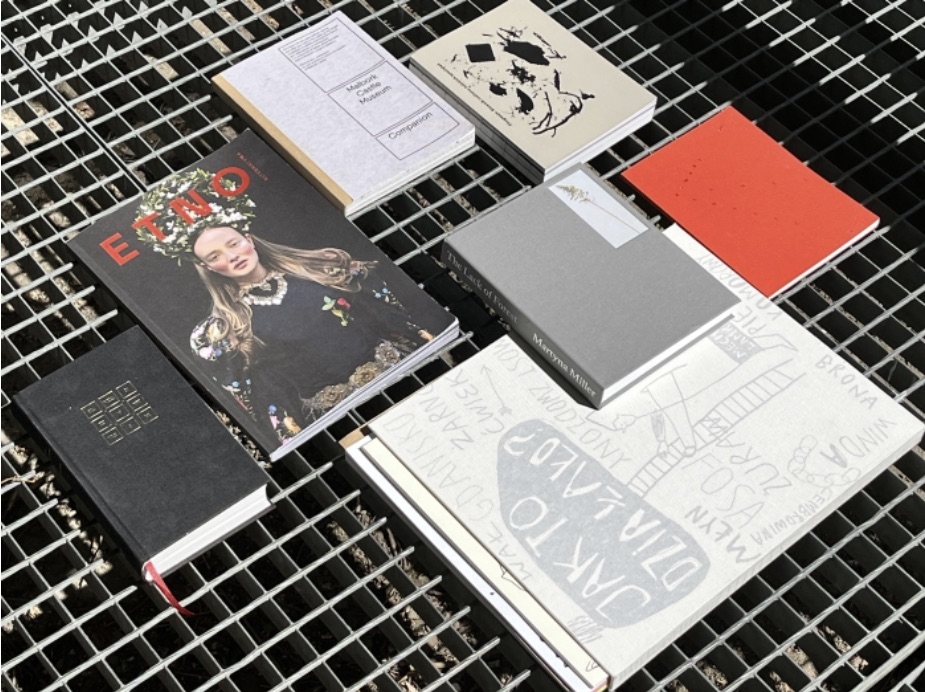
The Most Beautiful Polish Books 2025
16 July – 13 September 2026 · ages 3+
An annual design show of the best-made Polish books of the year. Short, free-flowing, and a genuine hit with children who already love picture books — they can see that somebody designed the object, not only wrote it.
Coming next
- Warsaw Under Construction 18: Sovereign and Well Fed — 30 August – 27 September 2026. The museum's long-running festival about the city; the past editions have been the most child-friendly thing MSN does.
- Adam Kozicki: Everyone at War with Everyone Else — from 12 September 2026 to 10 January 2027.
How we visit a museum with children
After a lot of these afternoons, we have settled on three rules that make the difference between a good visit and a meltdown:
- Three works, not thirty. Forty-five minutes, three things looked at properly. Walk past everything else without guilt.
- Three questions. What do you see? What would you add? How do you think they made it? That third question is the one that turns a child from a visitor into a maker.
- Paper and a pencil, no colours. A small sketchbook in the bag. Children who draw in a museum remember what they saw; children who only look remember the café.
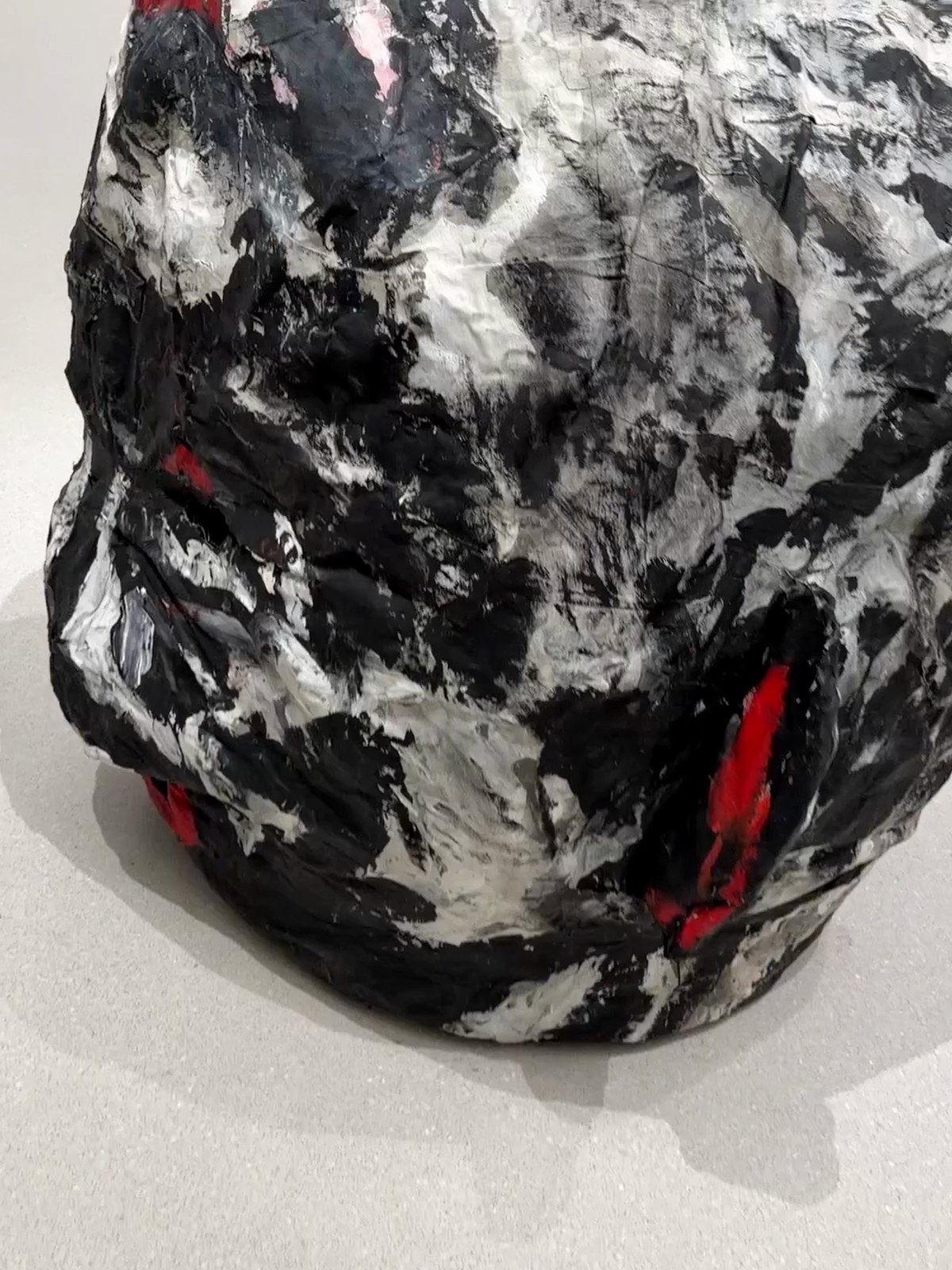
And one more: get close, then step back. Half the sculptures and paintings in this building fall apart into pure texture when you stand at arm's length, and reassemble into a face when you retreat three steps. Children find this genuinely funny, and it teaches the lesson faster than any explanation — close up it's paint, far away it's a person.
The building itself, designed by Thomas Phifer, does half the work for you — huge windows, wide white staircases, and enough space that a child who needs to move can move.
And then the best part: making something
The reason we keep going back is that a museum visit is only half of it. The other half happens afterwards, when a child sits down with paint and tries the thing they just saw — the thick Dwurnik brushstroke, the Mehretu scribble that becomes a city, the head built up out of lumps of texture.
That is exactly what our art classes for kids in Warsaw are for: small groups, real materials, and projects that start from real art rather than from a worksheet. We run weekly studio classes for ages 5–12 in Mokotów, art clubs in schools and preschools, and birthday parties — all in English.
Get in touch and we will tell you what your child would be making next week.
Ready to start creating?
Bring your little artist to a class where English just happens.
Book a class